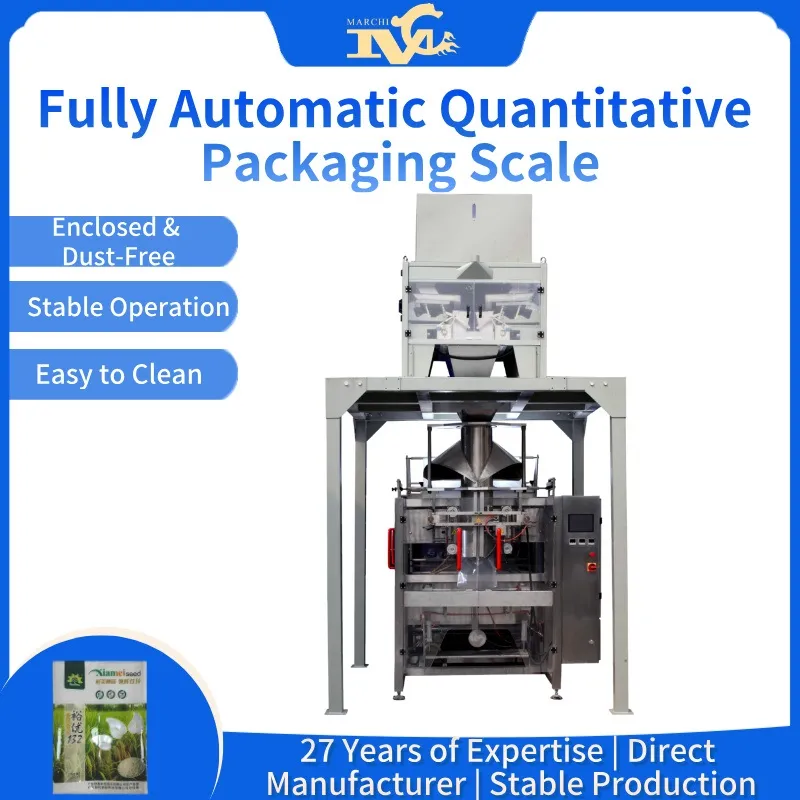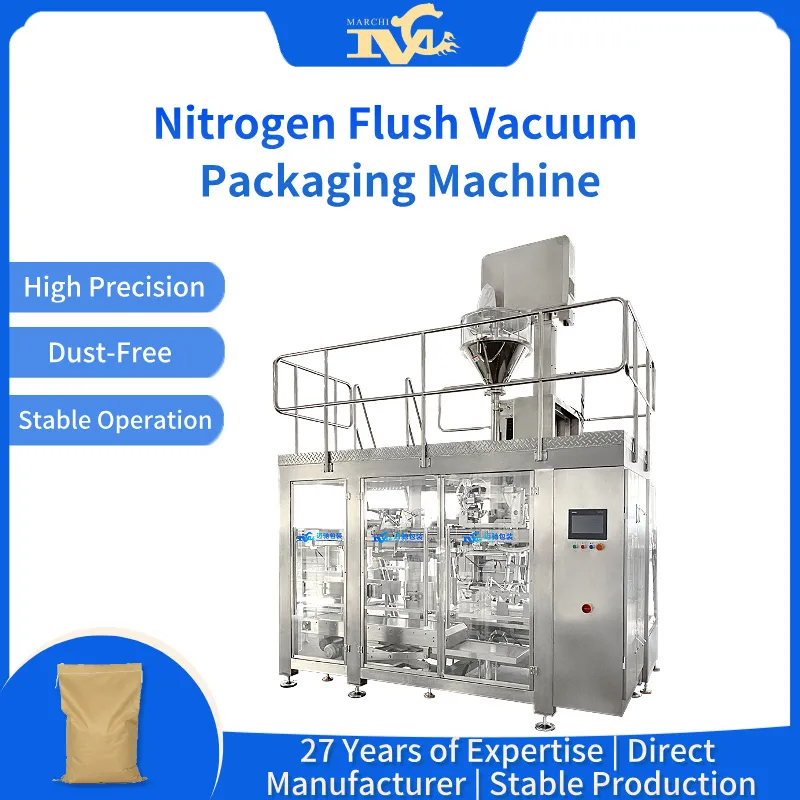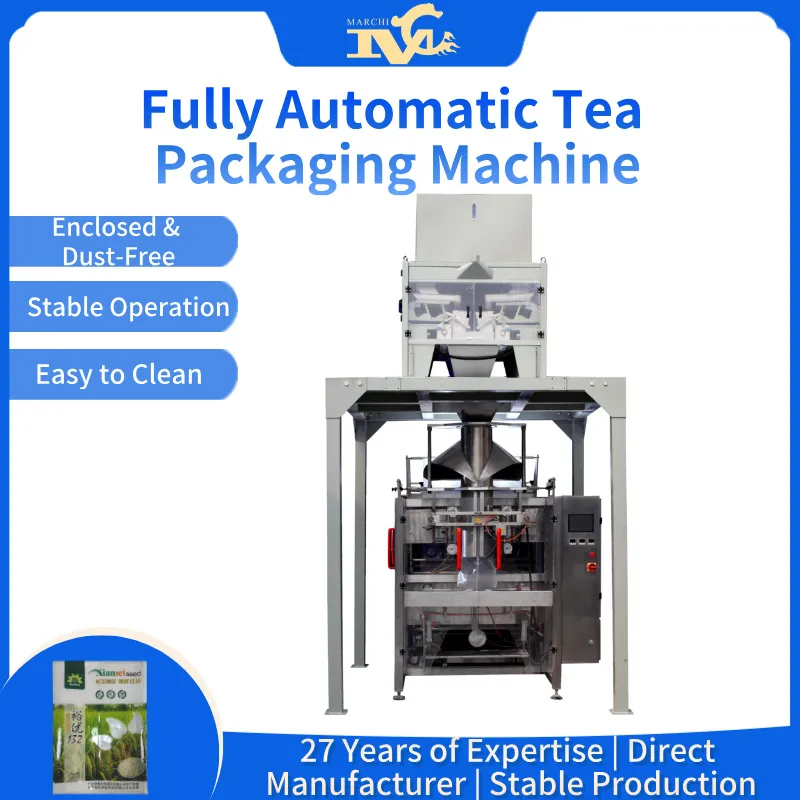
With the continuous expansion of power battery and energy storage industries, the production of lithium battery cathode and anode materials has put forward higher requirements for precision, cleanliness and automation in the packaging process. New energy powder materials such as lithium iron phosphate, ternary materials, nickel-cobalt-manganese lithium, lithium cobalt oxide, lithium manganate, lithium carbonate, graphite powder, artificial graphite, natural graphite, silicon-based anode materials, lithium titanate, mesocarbon microbeads, carbon black, carbon nanotubes, precursors and conductive slurries generally face challenges including dust emission, high gas content and precision fluctuation during packaging. Packaging machines have evolved from traditional filling tools into core equipment that ensures batch stability of materials and overall production line efficiency.
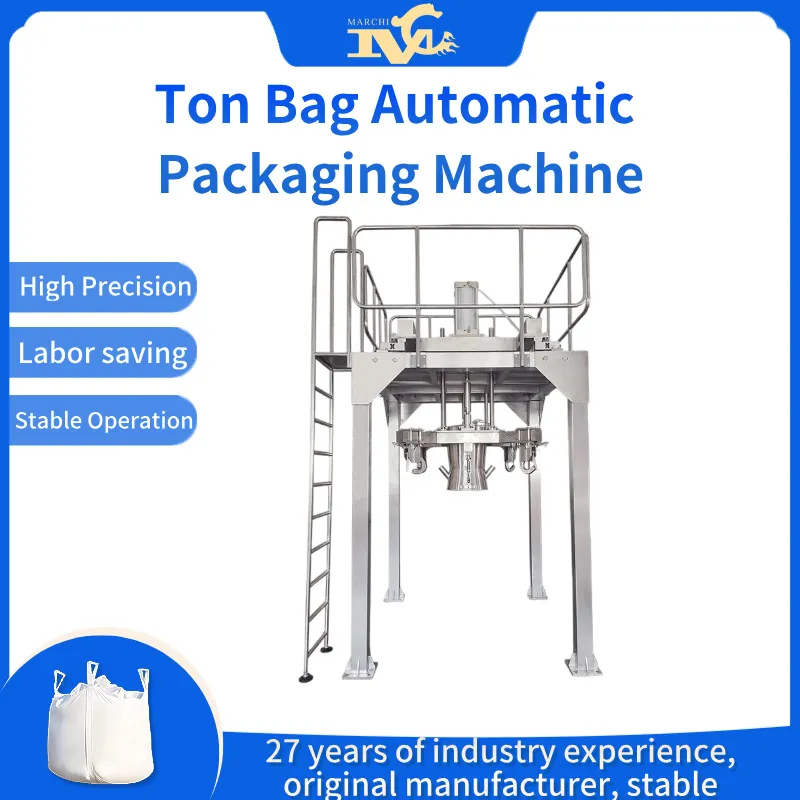
Guangzhou Marchi Packaging Equipment Co., Ltd., which has been deeply engaged in the field of intelligent packaging equipment for many years, has launched the MCJBP-1000CS carbon steel ton bag packaging machine targeting the physical characteristics of lithium battery cathode and anode materials. Adopting gross weight weighing and metering as well as a double screw feeding structure, this equipment achieves a packaging accuracy of ±0.1%~±0.3% and a packaging speed of 5 to 6 bags per hour (single bag weight: 400~600kg). The total power is 2.45kW with AC380V/50Hz power supply, supported by comprehensive preliminary scheme design and rapid after-sales service.
I. Model Selection: Carbon Steel Ton Bag Packaging Machine for Ultra-fine Powder
MCJBP-1000CS is specially designed for large-capacity and high-precision packaging scenarios, with an applicable packaging weight range of 400 to 600 kilograms. In view of the characteristics of lithium battery cathode and anode materials such as easy dusting, adhesion and bridging, the equipment is equipped with a double screw feeding device to realize stable conveying by material self-weight and flexibly control feeding flow through frequency conversion speed regulation. A cut-off butterfly valve is installed at the outlet of the single arc feeding gate to effectively prevent accidental falling of residual materials, avoiding impacts on packaging accuracy and environmental pollution. Meanwhile, the professional pneumatic fork mechanism can continuously disturb the feeding area to prevent powder arching and bridging, ensuring a continuous and stable feeding process.
The overall frame of the equipment adopts carbon steel structure with sufficient strength and rigidity; all parts in direct contact with materials are made of 316L stainless steel, meeting the strict requirements of new energy materials for cleanliness and corrosion resistance.
II. Core Configuration: Coordinated Operation of Weighing, Lifting and Bag Hooking & Unhooking
The weighing platform is equipped with high-precision and impact-resistant weighing sensors with excellent long-term stability, together with a special force transmission connection structure with overload protection and limiting functions. This design ensures 100% transmission of bag weight to the sensors without any lateral component force, and features good automatic mechanical reset performance to effectively reduce maintenance frequency.
The lifting mechanism is fixed on the weighing platform, composed of a cylinder lifting device and four guiding mechanisms. During material filling, the bag can be lifted and lowered several times as needed to achieve the optimal filling effect. After weighing, the lifting mechanism steadily lowers the heavy bag to the ground or pallet, transforming the bag from upper suspended state to bottom supported state, facilitating subsequent automatic bag mouth loosening and automatic sling unhooking.
The bag hooking, unhooking and clamping device is fixed at the cylinder bottom of the lifting mechanism and exerts force on the weighing platform, adapting to size changes of packaging bags with a nominal volume of 1200~1400L. During empty bag loading, slings are hung manually and the bag mouth is clamped pneumatically; during heavy bag unloading, the bag mouth is automatically loosened and slings are unhooked, featuring convenient and reliable operation.
III. Full-process Packaging Operation
Taking lithium iron phosphate or graphite anode powder as an example, the complete operation process of the MCJBP-1000CS packaging machine is as follows:
Step 1: Automatic Feeding
The double screw feeding device starts up with frequency conversion controlling high and low-rate feeding, and the pneumatic fork continuously prevents material bridging.
Step 2: Lifting and Filling
The empty bag is clamped and hung on the weighing platform by the bag hooking and unhooking device. The lifting mechanism lifts and lowers timely during filling to promote material settlement and gas discharge.
Step 3: Precision Weighing
The weighing sensor feeds back weight data in real time, and the cut-off butterfly valve closes quickly to cut off material supply once the target weight is reached.
Step 4: Bag Lowering and Unhooking
After weighing completion, the lifting mechanism lowers the fully loaded bag to the ground pallet, and the bag hooking and unhooking device automatically loosens the bag and unhooks the slings.
Step 5: Sealing and Inspection
The rear end is equipped with a sealing and sewing device (heat sealing or stitching), followed by weight re-inspection and metal detection.
Step 6: Robot Palletizing
Qualified bags are conveyed to the robot palletizing station through the production line, and automatically stacked according to preset stacking patterns to complete preparations before warehousing.
The whole process realizes automatic connection from powder feeding to palletizing and warehousing, greatly reducing manual intervention and improving production line efficiency and consistency.
IV. Customer Pain Points and Marchi Solutions
In the actual production of lithium battery cathode and anode materials, enterprises generally face three core pain points.
Pain Point 1: Severe dust leakage
Ultra-fine powder is prone to dusting, causing excessive workshop dust concentration, endangering operators’ health and bringing cross-contamination risks to material purity.
Marchi Solution: A cut-off butterfly valve is arranged at the feeding end, forming a closed negative pressure environment together with inflation and return air dust removal pipelines. The 316L stainless steel parts in contact with materials feature smooth surfaces to reduce material adhesion and residue, controlling dust diffusion from the source.
Pain Point 2: Large packaging volume caused by high gas content
Powder entrains a large amount of air, resulting in bulging bags after packaging, low warehousing and transportation efficiency and high logistics costs.
Marchi Solution: The lifting mechanism lifts and lowers repeatedly during filling, combined with continuous disturbance by the pneumatic fork, to effectively discharge internal gas of powder, increase material bulk density, reduce packaging volume and cut down overall logistics costs.
Pain Point 3: Fluctuating packaging accuracy
Significant weight differences among different production batches directly affect battery energy density and product consistency.
Marchi Solution: Adopting high-precision weighing sensors and anti-lateral force transmission structure to avoid interference from lateral force, the packaging accuracy is stably controlled within ±0.1%~±0.3%, meeting the strict requirements of cathode and anode materials for batch weight consistency.
In addition, Marchi provides full-cycle services including pre-sales material testing, scheme design, after-sales installation and commissioning, and operator training. The equipment enjoys a one-year warranty and lifelong maintenance.