- Secondary Packaging Machine | Maichi Bag-in-Bag Food Small-Bag-to-Large-Bag Packaging Solution
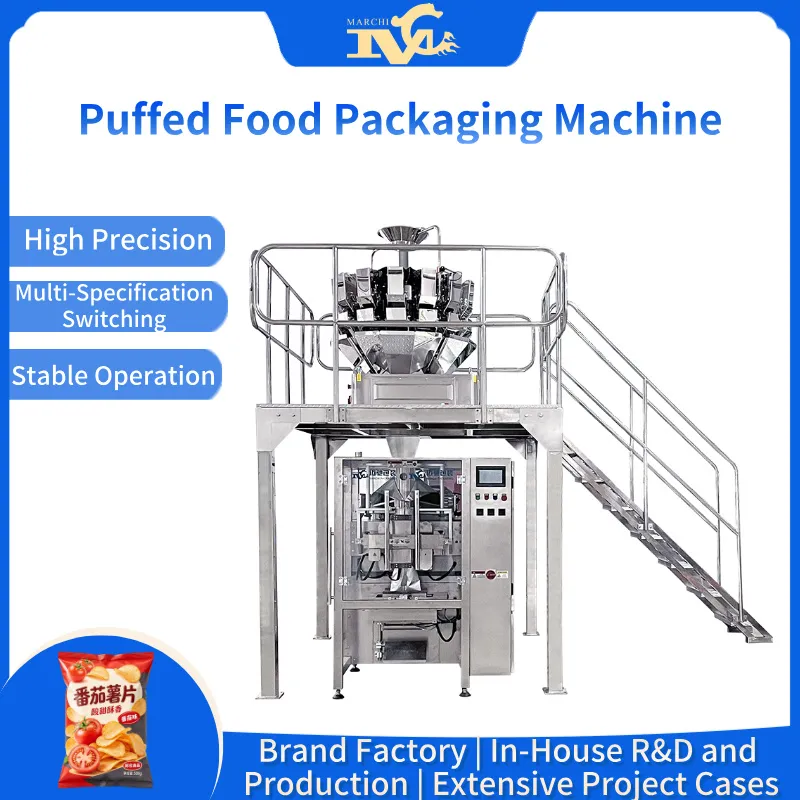
- Puffed Food Packaging Machine | Automated Packaging Solution for Snack Foods
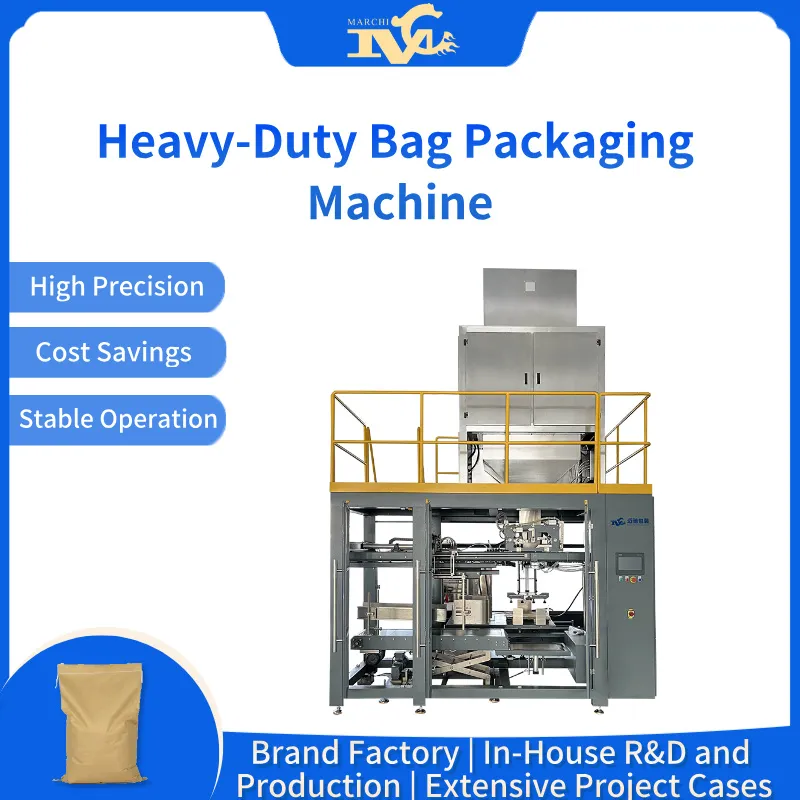
- How Does the Heavy-Duty Automatic Bag Packaging Machine Help Enterprises Reduce Costs and Increase Efficiency? Analysis of Five Major Automation Functions
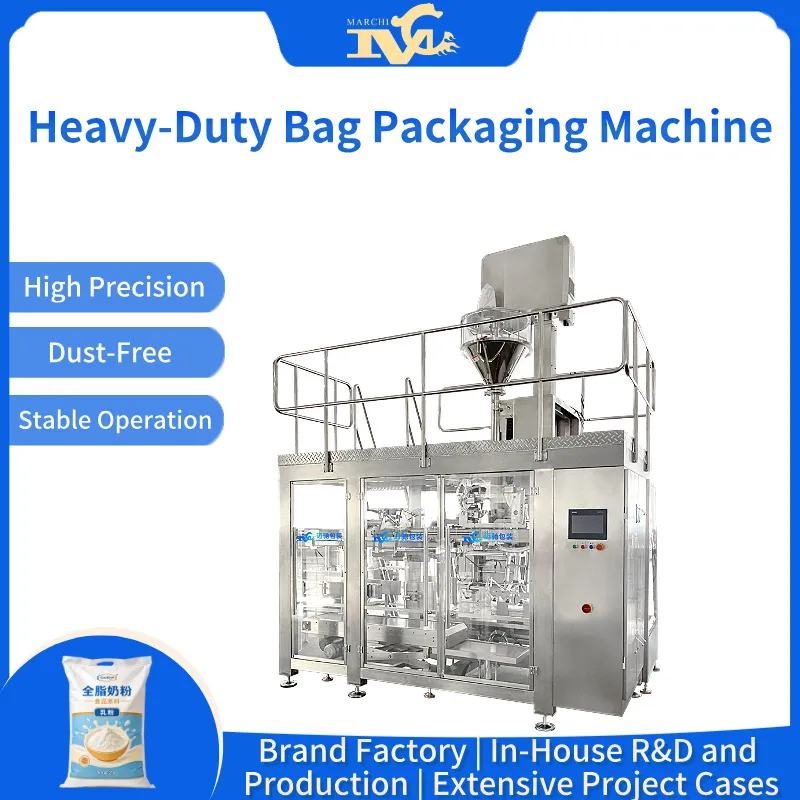
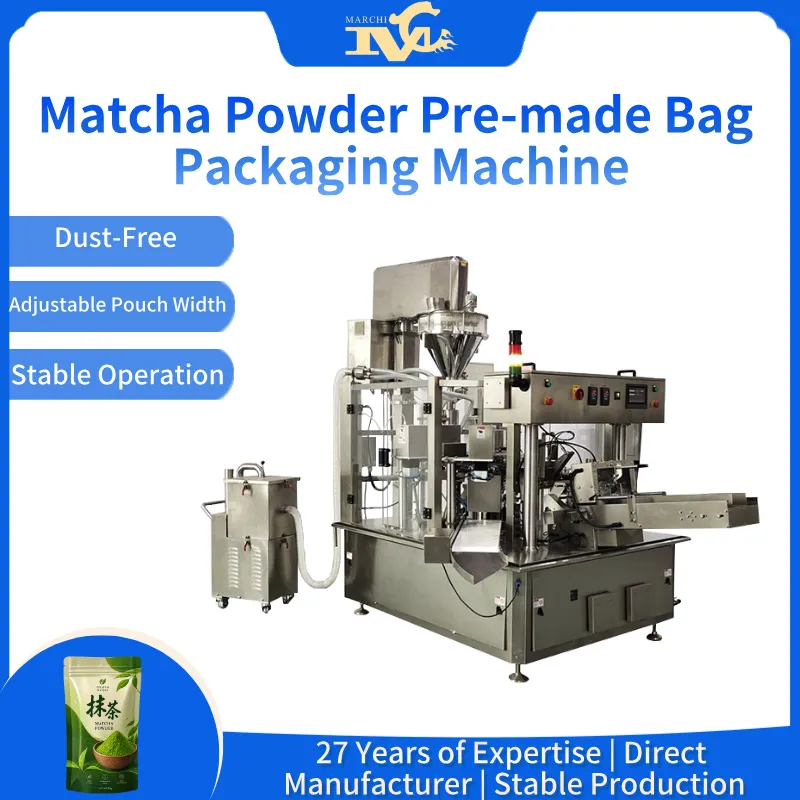
- Heavy-Duty Bag Packaging Machine Selection Guide: Introduction to Automated Packaging Production Line for Powder Materials
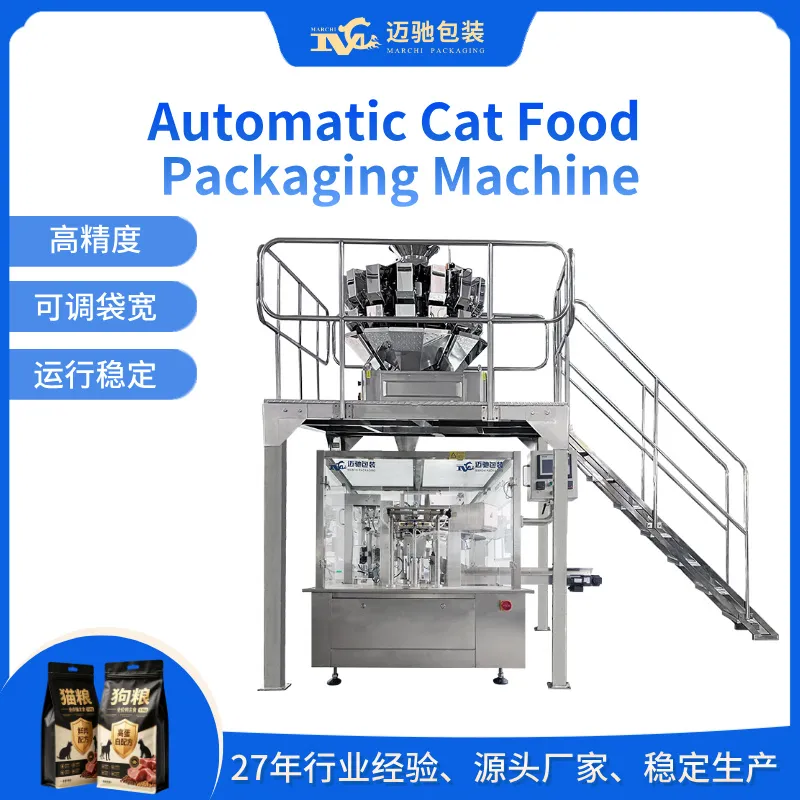
- Fully automatic dog food and cat food packaging machine, empowering pet food factories to upgrade automation
contact person:summer
Telephone:+86 189 1960 5953
email:summer@maichipak.com
address:Guangzhou Panyu District, Guangdong Province — Liandong U Valley International Enterprise Port Intelligent Manufacturing Industrial Park
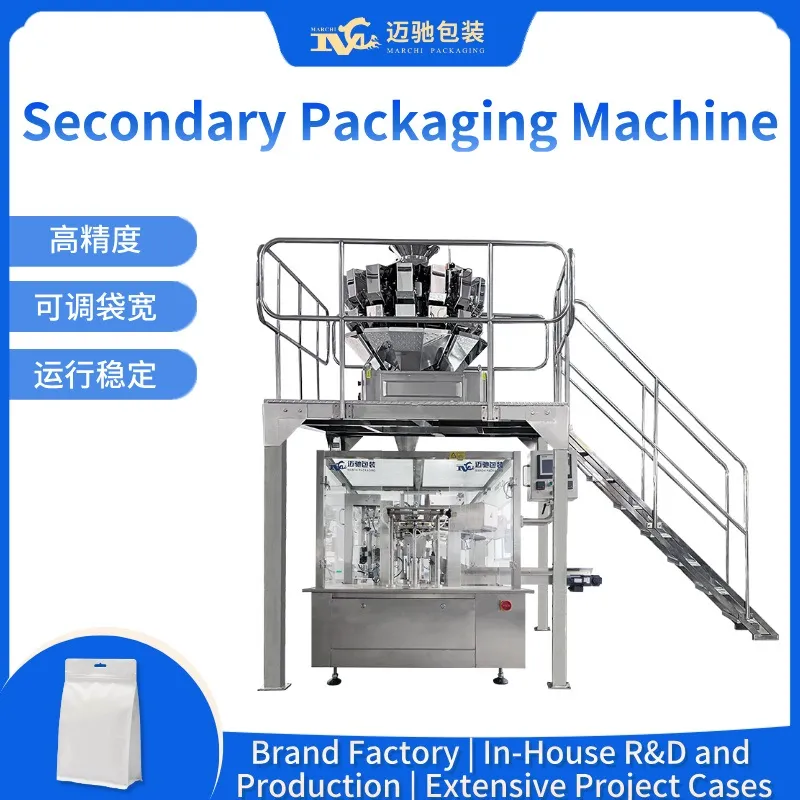
Secondary Packaging Machine | Maichi Bag-in-Bag Food Small-Bag-to-Large-Bag Packaging Solution
Walking into the snack shelf of a supermarket, you will find that many products are "small bags inside a large bag": a bag of nuts contains more than a dozen independent small packets, a box of candies contains portioned small packs, and a bag of tea contains individually sealed sachets for each brew. This combination pack has become a common packaging format in the food industry. Behind it, a key process is to put the small bags that have completed primary packaging into a large bag and seal it—this is exactly what a secondary packaging machine does. For food enterprises, how well this process is done directly affects finished product appearance, sealing quality, and shipping efficiency.
What is secondary packaging, and which products need it
Packaging is usually divided into two steps: the first step is to put bulk materials into small bags and seal them, giving the product independent protection; the second step is to put several small bags into a larger bag to form a combination pack suitable for sales and transportation. The second step is secondary packaging, commonly known as "bag-in-bag" or "small-bag-to-large-bag."
Products that need secondary packaging are very common:
● Snack foods that are expected to be taken by portion and keep the small bags independently sealed;
● Channel products that need to be made into distributor packs, promotional packs, or family packs;
● Customized orders with many small-bag specifications that need to be combined and shipped according to customer requirements;
● Products that need to improve shelf display effects and highlight the "individually packaged" selling point.
In other words, as long as a product has a "small bag + large bag" combination requirement, this process cannot be avoided. Manual bagging can still cope when output is small, but once orders scale up, counting errors, poor sealing, and labor costs will be exposed collectively. At this point, a bag-in-bag secondary packaging machine is needed to take over.
Why bag-in-bag packaging is becoming more and more common
Better product protection. The inner small bags are independently sealed for moisture-proofing and freshness preservation; the outer large bag provides protection for transportation and display. After opening the large bag, the small bags can still remain intact.
More flexible sales. The same product can be made into single-bag packs, family packs, and promotional packs, simply by adjusting the number of small bags and the large bag specifications, without changing the primary packaging production line.
Neater transportation. Small bags directly in bulk are prone to compression and damage. Once packed into large bags, they stack neatly, making warehousing and transportation more convenient.
Friendlier experience. Consumers take by small bag, and the rest is unaffected. This is especially important for products that need to be consumed multiple times, such as candies, nuts, and tea.
Because of these values, more and more food enterprises have turned secondary packaging from an "optional back-end process" into part of product planning. Choosing a stable secondary packaging machine is essentially investing in the product's shelf performance and shipping efficiency.
What problems must the small-bag-to-large-bag secondary packaging machine solve
Putting small bags into large bags sounds simple, but in practice several conditions must be met simultaneously:
Stable bag picking and opening. The outer bag may be a stand-up pouch, zipper pouch, or flat pouch, and the film materials vary in softness and stiffness. The equipment must ensure that the bag is smoothly opened every time; otherwise, discharging cannot be carried out.
Accurate metering. Whether combining by quantity or by weight, it must be possible to set and maintain stability. Counting deviations will directly affect delivery and customer complaints.
Reliable sealing. Small bags tend to leave crumbs or dust at the bag mouth. If not cleaned before heat sealing, false sealing and air leakage will occur. The equipment needs to complete bag mouth cleaning before sealing.
Fast specification changeover. Food enterprises often run multiple specifications at the same time, and changeover time directly affects effective capacity. If bag width adjustment relies on manual adjustment group by group, it is both slow and error-prone.
Abnormal conditions can stop the machine. When there is no bag, incomplete bag opening, insufficient air pressure, or abnormal sealing temperature, the equipment should be able to alarm or stop to avoid batch defects.
A qualified small-bag-to-large-bag secondary packaging machine does all these things well at the same time, rather than excelling at only one action.
What materials can the food secondary packaging machine handle
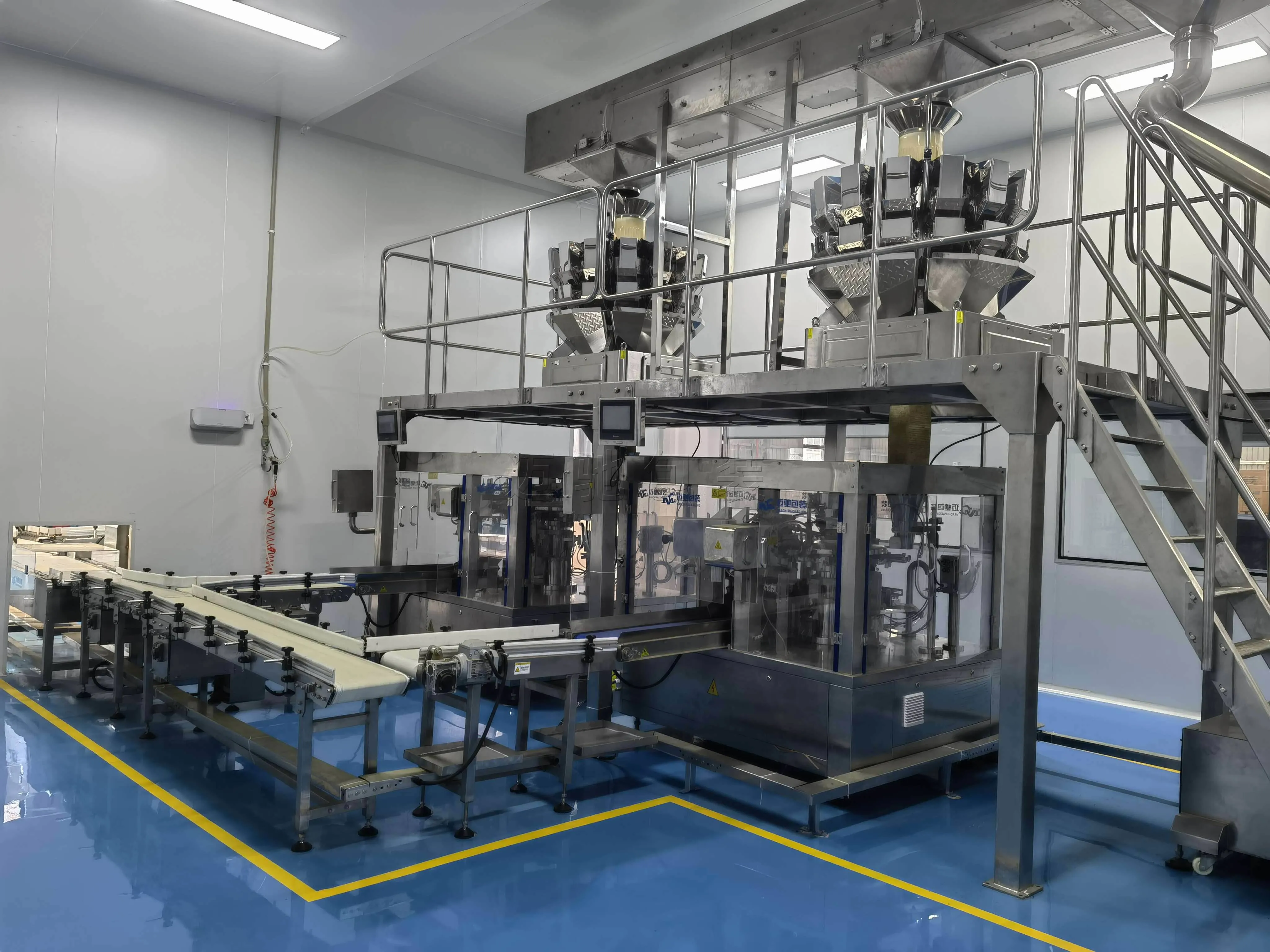
The Maichi MCGD8-200 is a general-purpose food secondary packaging machine. Its material-contact parts are made of 304/316 stainless steel or food-grade plastic, meeting hygiene requirements, and it covers a wide range of materials:
● Snack foods: candies, chocolate, biscuits, pastries, puffed foods, potato chips, cereal;
● Nuts and roasted seeds: cashews, pistachios, almonds, peanuts, sunflower seeds, walnut kernels;
● Instant drinks: tea, coffee beans, solid beverages, cereal;
● Condiments: white sugar, salt, seasonings, sauce packets, soup base packets;
● Grains and multigrain: rice, millet, brown rice, oats, mung beans, red beans;
● Pet food: small-bag combination packs of cat food and dog food.
Whether the material is granular, flake-shaped, or small-block-shaped, as long as the outer layer uses a composite film bag type, combination packaging can be completed by adjusting metering parameters and bag width. For enterprises producing multiple categories, one machine covers multiple product lines, and equipment utilization is naturally higher.
What this equipment can do
The MCGD8-200 has a packaging size of 100–300 mm in length and 100–200 mm in width, and a packaging speed of 25–90 bags per minute. It supports stand-up pouches, zipper pouches, angled-spout stand-up pouches, and flat pouches, and is compatible with PE composite film, aluminum foil film, aluminized film, and other composite material films. Bag width is motor-controlled, and all gripper groups can be synchronously adjusted with one button. The whole machine is PLC-controlled and operated via a human-machine interface. The error-prevention logic covers "no material addition when there is no bag or the bag opening is incomplete, no material discharge when the bag is not opened, and no sealing when there is no bag or no material added," and optional stop alarms are available for open door, missing color ribbon, insufficient air pressure, and abnormal sealing temperature.
What changes will installing secondary packaging equipment bring
Efficiency changes. Manual feeding becomes continuous automatic operation, with a stable cycle and no longer affected by recruitment and fatigue.
Consistency changes. Metering, sealing, and shaping are completed by the equipment according to set parameters, so the difference between each finished bag is smaller and quality is more controllable.
Hygiene changes. Reduced contact between hands and materials, combined with stainless steel contact surfaces, makes cleaning and hygiene management easier.
Changeover changes. Bag width is adjusted with one button, and parameters are switched on the screen, significantly shortening downtime for multi-specification production.
These changes may seem inconspicuous individually, but together they mean improved shipping efficiency and finished product qualification rate. This is also why many enterprises, after stabilizing their primary packaging production lines, list the secondary packaging process as the next upgrade priority.
Confirm these things before purchasing
Confirm materials and bag types. Use actual small bags and large bags for trial runs to verify whether the discharging channel is smooth and whether bag opening is stable—this is more reliable than looking at parameters.
Confirm capacity matching. Put the equipment speed into the context of the entire line and check whether it matches the cycle of upstream metering and downstream cartoning to form effective capacity.
Confirm the changeover method. Enterprises producing multiple specifications should focus on asking how bag width is adjusted and how long changeover takes, as this directly affects daily user experience.
Confirm after-sales and spare parts. The supply of wear parts, maintenance response speed, and whether operator training is in place are all part of long-term use costs.
Once these points are confirmed clearly, then discuss price and model—selection will be more reliable.
Conclusion
Secondary packaging may seem like just "putting small bags into large bags," but in fact it relates to product protection, shelf performance, and shipping efficiency. As a general-purpose secondary packaging machine, the Maichi MCGD8-200 can both make bag-in-bag combination packs and complete the small-bag-to-large-bag process in the food industry. One machine covers multiple types of materials such as candies, nuts, tea, and multigrain. If you are planning the secondary packaging process, you are welcome to contact us for configuration details, and you are also welcome to bring materials for a trial run—running your own products through it once is more intuitive than looking at any parameters.