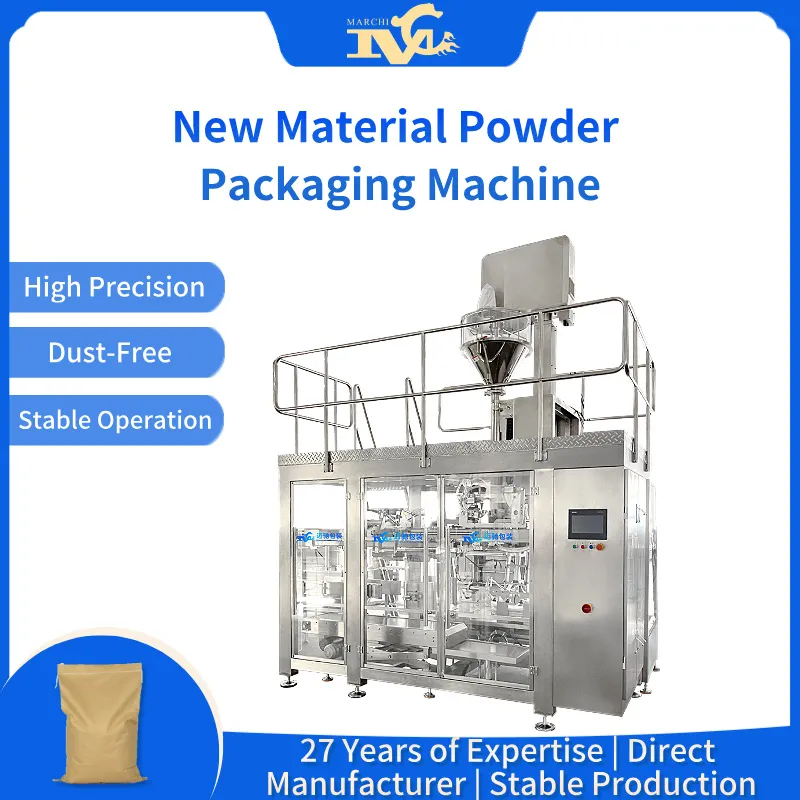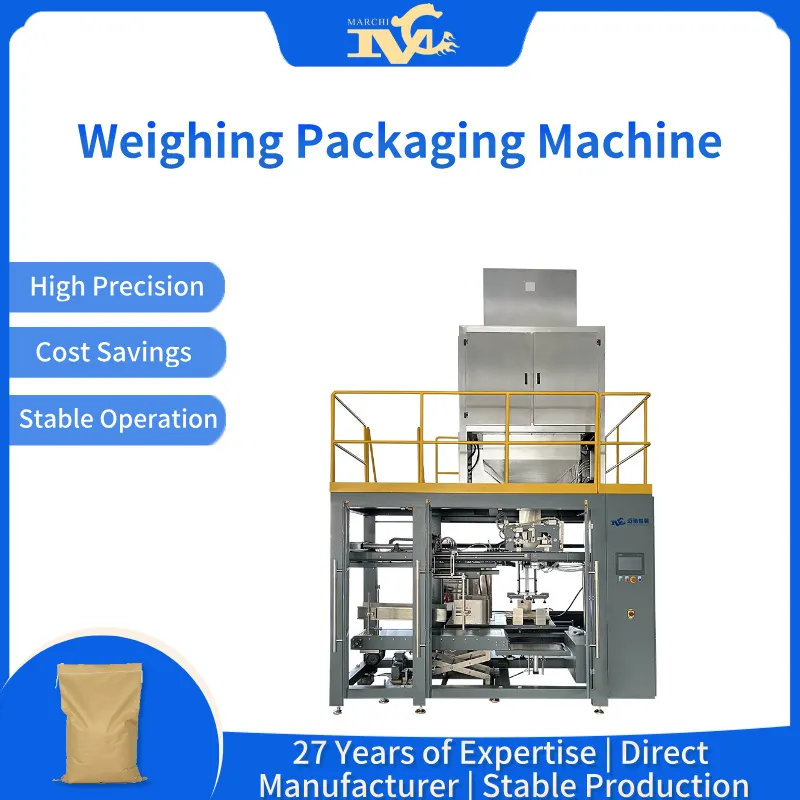
In recent years, the application of powder materials in food, nutrition & healthcare, condiments, pharmaceuticals, chemicals, agricultural materials and other fields keeps expanding. Powder can‑filling imposes higher requirements on metering stability, cleaning convenience and production‑line connectivity. As a result, fully‑automatic powder filling machines and powder quantitative filling machines have drawn increasing attention from packaging enterprises. As one of the manufacturers of powder filling machines, Guangzhou Marchi Packaging Equipment Co., Ltd. provides the MC‑LLZGCZ‑S‑50L‑15L dual‑station can‑filling equipment for powder can‑filling scenarios, which completes processes including metering and filling, weighing feedback and out‑of‑tolerance rejection.
I. Wide Variety of Powder Materials with Distinct Packaging Demands
Powder materials cover a broad scope. Common packable materials include milk powder, protein powder, soybean powder, coffee powder, meal‑replacement powder, probiotic powder, cocoa powder, matcha powder, green tea powder, flour, starch, rice flour, corn starch, cassava starch, chilli powder, pepper powder, cumin powder, ginger powder, five‑spice powder, cinnamon powder, turmeric powder, baking powder, baking soda, traditional‑Chinese‑medicine powder, notoginseng powder, ganoderma powder, collagen peptide powder, whey protein powder, soy protein isolate powder, non‑dairy creamer, enzyme preparations, pesticide powder, veterinary‑drug powder, titanium dioxide, calcium carbonate, zinc oxide, talcum powder, water‑soluble fertilizer, compound fertilizer and feed additives. Different materials vary in flowability, bulk density, dust‑generation level and moisture‑absorbing property, bringing different requirements for metering modes, container compatibility and cleaning design of fully‑automatic powder filling machines.
II. Structure and Workflow of Dual‑Station Fully‑Automatic Powder Filling Machine
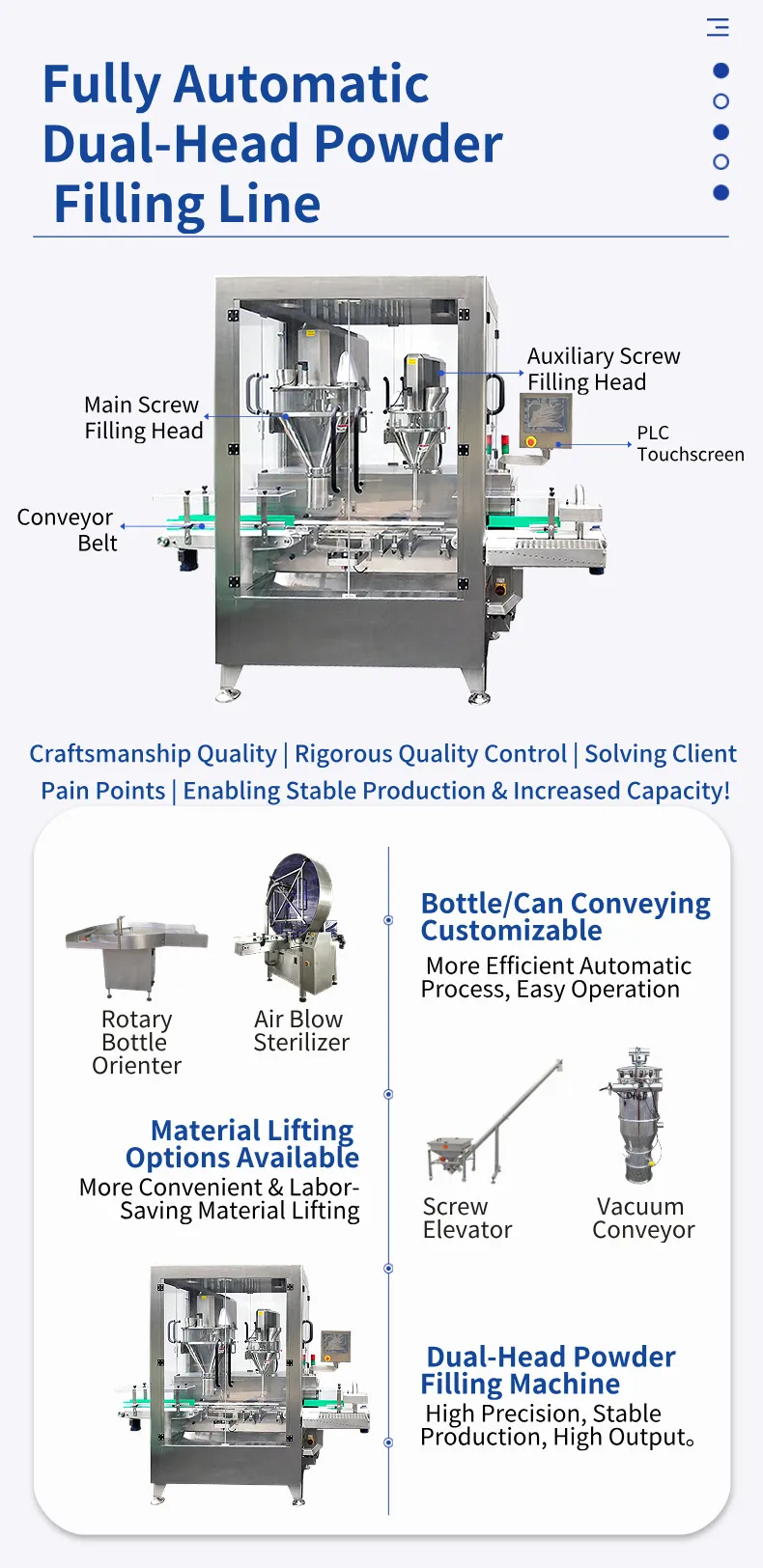
This fully‑automatic powder filling machine from Guangzhou Marchi Packaging Equipment Co., Ltd. adopts a dual‑station can‑filling design. Its working procedures are as follows: can feeding, can supporting, vibration, metering and filling, weighing feedback, supplementary filling, weight inspection and out‑of‑tolerance rejection, can discharging. Based on practical powder can‑filling experience, the equipment abandons the traditional turntable‑type can‑feeding concept and adopts a single‑row main‑auxiliary double‑head filling system together with a can‑feeding system. It ensures metering accuracy while solving the inconvenience of cleaning turntable‑type can‑feeding systems. The equipment can be matched with feeding, can‑sealing, labelling, cartoning and other devices to form a complete can‑filling production line for continuous multi‑process operation.
III. Main Technical Parameters and Application Scope
MC‑LLZGCZ‑S‑50L‑15L adopts dual‑screw filling heads for metering. Its can‑filling weight range is 100 g‑2000 g. It is compatible with containers with diameter of 60‑135 mm and height of 60‑260 mm. For can‑filling accuracy: ±1% for 100‑500 g range and ±2% for 500 g and above. Power supply: 3P AC 208‑415V, 50/60Hz; total power: 3.4 kW; overall machine weight: approx. 450 kg; compressed‑air requirement: 6 kg/cm², 0.2 m³/min; overall dimension: approx. 2650 mm × 1040 mm × 2300 mm. This equipment mainly performs high‑precision filling and metering. For powder products requiring control over net‑content fluctuation, the weighing‑feedback and supplementary‑filling links correct filling volume, while out‑of‑tolerance rejection prevents non‑conforming products from entering subsequent procedures.
IV. Manufacturing and Practical Experience of Guangzhou Marchi Packaging Equipment Co., Ltd.
As a powder‑filling‑machine manufacturer, Guangzhou Marchi Packaging Equipment Co., Ltd. has 27 years of manufacturing and service experience in packaging‑equipment sector with solid capabilities in production, commissioning and supporting services. Its powder quantitative filling machines support metering, filling, weight inspection and other links for packaging food raw materials, seasoning powder, nutritional powder, traditional‑Chinese‑medicine powder, chemical powder, agricultural‑material powder and other materials. The company focuses on adjusting screw parameters, filling speed and vibration assistance according to material characteristics to reduce dust generation and metering fluctuation. For moisture‑absorbing, dust‑prone or highly adhesive powders, sample testing can be carried out first to observe filling speed, accuracy and residue condition before finalising equipment configuration.
V. Key Considerations for Selecting Powder Quantitative Filling Machines
When selecting a fully‑automatic powder filling machine, users are advised to take into account material flowability, target can‑filling weight, container caliber and height, accuracy requirements, cleaning convenience and subsequent production‑line connectivity. Different powders behave differently during filling. Whether the powder‑filling‑machine manufacturer can make adjustments for specific materials is a critical factor affecting application performance. The dual‑station powder quantitative filling machine from Guangzhou Marchi Packaging Equipment Co., Ltd. can serve as a reference solution for powder can‑filling in food, pharmaceutical, chemical, agricultural‑material and other industries. Users may match it according to actual materials and production rhythm.
At present, fully‑automatic powder filling machines and powder quantitative filling machines are developing towards stable metering, easy cleaning, line compatibility and simplified operation. If powder‑filling‑machine manufacturers keep optimising filling structures according to specific material properties, they can help users improve powder‑packaging efficiency and net‑content consistency.